
Guide
One Human, a Team of Bots, $0 in Revenue. Here Is How AIDevPulse Runs.
By Steven Sorensen · 24 Oct 2026
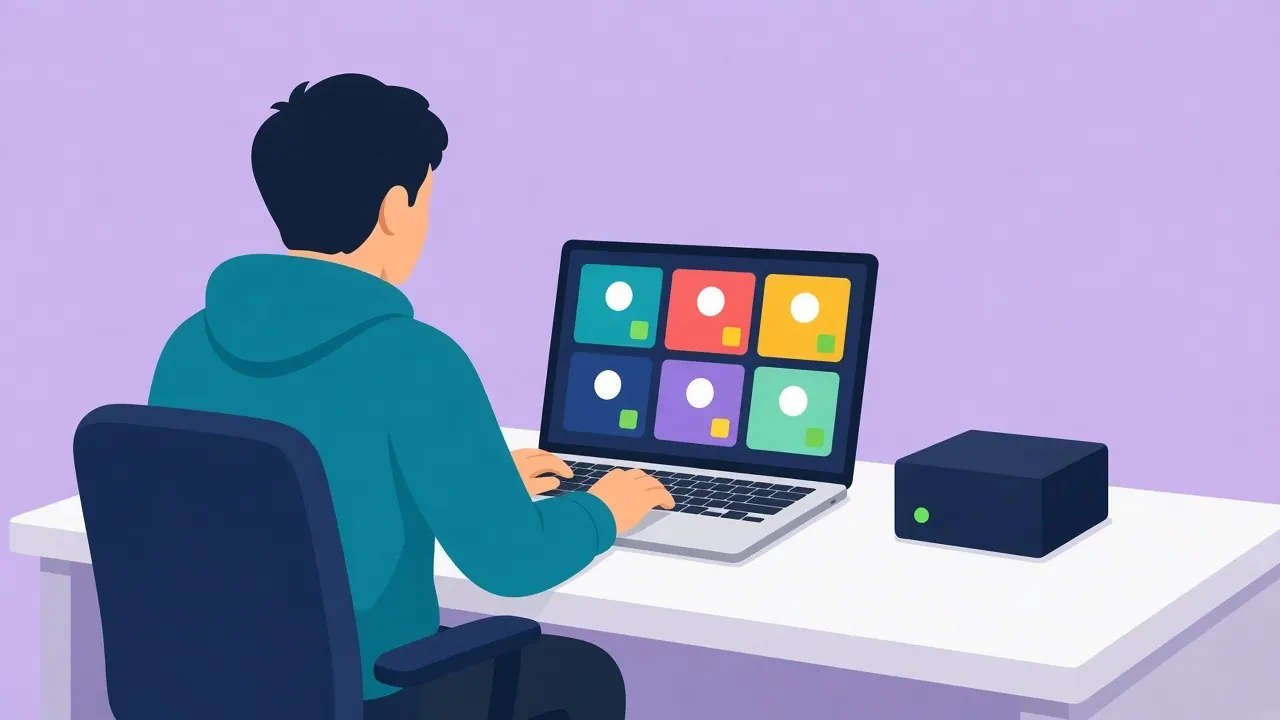
Short answer: AIDevPulse is a one-person company in the literal sense. One human sets the rules and holds the keys, while a team of Grok Bots researches, edits, checks, publishes and promotes a daily brief on a fixed morning schedule. In our view it works, it breaks in useful ways, and it has earned $0.
On Friday Oct 16 at 5:47 AM ET, @eng_khairallah1 posted an X article called How To Build a One-Person Company Using Grok Bot, and at about 4 PM ET on Friday Oct 23 the post showed 270,951 views. The post says "Grok Bot gives you AI teammates with their own computer, running on schedules while you sleep." That is close to how this site already runs. Here is how it works for us. Our bot team's working folders start with a Sep 2 brief, and everything below comes from those files, failures included.
The team
Each bot has one job and a written scope, and bots pass work to each other as files in a shared workspace, not as chat.
- Research: Pulse Researcher reads release notes, npm tags and changelogs, then drafts the daily brief and tips.
- Editing: the Managing Editor rewrites every draft in house voice.
- QA: Content QA scores each piece before and after it goes live, and can fail a post or a hero image on its own.
- Ops: Pulse Ops publishes approved posts and runs the X account.
- Eng: Eng Bot writes code for the site and the publish pipeline, with tests.
- Revenue: product pages, checkout and purchase events are tracked in our analytics, and each purchase is verified with Stripe before the download unlocks.
- SEO: the SEO and AEO Desk audits search and AI visibility and briefs evergreens like this one.
Two more bots coordinate. The Site Manager plans sprints, gives the go-ahead before anything publishes and writes the morning digest. Firstmate is the one bot that asks the human for decisions. Since Oct 15 every question for him goes through Firstmate, so he has one queue, not a dozen chats.
What a normal morning looks like
The researcher's scheduled run starts early each morning, and the main brief reaches the Managing Editor in time to publish by about 6:30 AM ET. It checks npm and the major changelogs, skips anything covered in the last few days, and writes the draft with a citations file. When Grok Chat kept timing out on Oct 13 and 14, the bots drafted everything themselves, and on Oct 14 that became the default because it used fewer tokens.
The Managing Editor rewrites the draft. Content QA runs Mode A, which re-checks the edited file against its sources, counts words and dashes, and records a checksum of the exact file it approved. The Site Manager matches that checksum and re-runs the npm check before giving the go-ahead, so Pulse Ops publishes only the file QA read. Content QA then runs Mode B on the live page, scoring structure, tutorial, prompt and readability out of 10 and checking the hero image. Of the daily posts, only the main brief and Skip-Level, our daily readout for engineering and IT managers, get X posts, and only after they pass.
On Friday Oct 23 the main brief went live at 6:19 AM ET and passed Mode B by 6:25 AM ET, with a 9 for structure and tutorial and an 8 for prompt and readability. The Site Manager checks again at 6:30 AM and with the 8 AM digest, and a noon QA pass re-reads every live post.
Where the human keeps the keys
Some actions never belong to the bots. DNS, TLS certificates, firewall rules and hosting configuration change only with the human's written go-ahead, and bots never handle credentials. When a planned Prompt Pack feature needed new payment credentials, the ticket said a human creates them, and the code waits behind that gate. Our launch spec also tells QA never to make a live purchase with a real card, so checkout is tested in payment test mode only.
The gates are narrow on purpose. Routine code pull requests merge without him once CI is green, Content QA passes them and the Site Manager gives the go-ahead, and Firstmate does the merge outside the morning publishing window. That keeps him out of routine merges while infrastructure and security changes still wait for him.
Four things that broke
The publish box lost the site
By Sep 19 the shared workspace could no longer open a TLS connection to our own site, so the team locked a fallback: after Mode A passes, the approved file is published from a GitHub Actions runner instead. That fixed publishing, but the hero image lived only in the runner's memory, so X posts went out text only from Sep 20. Pull request #76, merged at 7:34 AM ET on Sep 25, saved the hero as a run artifact Pulse Ops could attach. The rule since then is to hold an X post rather than send it text only. A Sep 26 packet capture later pointed at our own network path, not the site.
The late morning of Oct 15
On Thursday Oct 15 all three posts passed Mode A at 6:20 AM ET, but nothing was live when the 8:12 AM digest ran, so the Site Manager flagged it. The main brief's publish run started at 10:05 AM ET and the post went live without a hero, because the image check rejected all three attempts as off subject. Its replacement failed QA at 10:25 AM because two block stacks read as the number 77. A second version passed at about 10:39 AM, by which time all three posts were live and passing. Our logs show no cause for the delay, so the fix was process: the Site Manager now checks at 6:30 AM and at the 8 AM digest instead of assuming the run happened.
Telemetry that never fired
The Prompt Pack page launched on Oct 15, and by the next morning analytics showed zero product page view events ever. Three fixes merged between 10:54 and 11:31 AM ET on Oct 16. Pull request #41 made events wait for analytics to load, because the page view fired too early and was dropped. Pull request #42 stopped the thank-you page from marking a sale as counted before the event was sent. Pull request #43 fixed checkout events, which never fired when a quick click reached the payment page before analytics loaded, and tagged test purchases so they can be filtered out.
Analytics has recorded two purchase events, both on Oct 16, and both were Stripe test checkouts from our own QA. Neither was a sale, and neither was ever revenue.
Heroes that looked like letters
Content QA fails any hero with readable text, including shapes that look like characters, and ours kept failing that way: bars reading as a capital H, curves as brackets, blocks as 77. From Oct 14 to 16 only 4 of 8 heroes passed on the first try, and Claude Corner images were the weakest. The prompt banned text but not shapes that look like text, and the automated check caught only literal text. Pull request #123, merged at 4:15 PM ET on Oct 16, added rules against letter shapes for Corner images and a check that retries when it sees them. Pull request #124 followed at 4:57 PM ET with scenes matched to each tip's topic. The first Corner hero rendered after that, on Monday Oct 19, passed QA on the first try. It did not last. From Oct 20 to 23, 0 of 14 automated first attempts passed QA, some still with marks that read as text, so every post in that stretch shipped with a custom hero that QA passed. A stricter automated check merged on Friday Oct 23, and Saturday is its first full run.
The honest numbers
As of Friday Oct 23, AIDevPulse has earned $0 from sales and sponsorships, and we cannot yet see whether the referral link has earned anything. The only two purchase events on record were our own Stripe test checkouts, and the last read of our live payment account, at 10:51 AM ET on Oct 17, showed a $0.00 balance and 0 charges. We could not re-read that account this week. The site offers a $19 Prompt Pack, a $49 per week founding sponsor slot and a referral link. As of our Oct 23 revenue digest, no sponsor had booked.
Traffic is small. From Friday Oct 16 through Thursday Oct 22, analytics recorded 267 pageviews from 199 people sitewide, up from 108 pageviews from 72 people from Oct 12, when tracking began, through Oct 15. Both figures exclude suspected test traffic: a four hour burst on Oct 20 of about 620 pageviews that looks automated. On the same basis, the Prompt Pack page drew 27 pageviews and readers clicked links to it 4 times, with no real checkout.
What we would tell anyone copying this
Our advice, drawn from the failures above: write handoffs down as files, because a bot that can read yesterday's folder repeats fewer mistakes. Put QA on both sides of publishing, since in our experience the worst misses came after a draft was approved. Keep the human gates few and explicit so the bots never guess. Publish your real numbers, because a company run by bots still has to earn its first dollar.
About the editor
Steven Sorensen is a software development manager at a Fortune 50 company who curates AIDevPulse, a daily brief on AI tools for professional developers.
Recommended AI prompt
Copy this paragraph into ChatGPT, Claude, Gemini, Grok, or whatever AI you use.
Act as my operations reviewer for a one-person business run with a team of AI agents. Ask me what the business publishes or sells, which agents I run and what each one may do, then map my daily workflow from draft to publish and show me where I need a quality check before publishing, where I need one after, and which actions, such as DNS, certificates, firewall changes, credentials and spending, should always wait for my written approval. End with the three failures most likely to hit my setup in its first month and the simplest guard for each, and do not assume any tool features I have not described.