
Daily brief
Altera Launches FPGA AI Suite 26.1.1 with Spatial…
By Steven Sorensen · 1 May 2026
At a glance
## At a glance – Altera released FPGA AI Suite 26.1.1 on April 30 with a new spatial compiler delivering deterministic low-latency inference for robotics and edge physical AI systems. – Anthropic’s Claude Code terminal agent continues weekly updates, excelling at predictable diffs, full-codebase awareness, and real-world refactors compared to alternatives. – MCP (Model Context Protocol) adoption has surged, powering standardized tool integration across Claude Code, OpenAI Codex CLI, and Gemini CLI with tens of millions of monthly SDK downloads. – Terminal-first coding agents and orchestration layers are maturing into operational execution backbones, even as developer trust gaps and review overhead persist.
The maturation of agentic tooling and hardware-aware AI marked the close of April 2026. On one front, Altera’s FPGA AI Suite update brings ASIC-like performance with deterministic execution to physical systems—critical for robotics, real-time sensor fusion, and autonomous machines where jitter is unacceptable. On the software side, terminal agents like Claude Code, OpenAI’s Codex CLI stack, and Gemini CLI v0.39 are converging around MCP as a common interoperability layer. These tools no longer feel like experimental copilots; they read entire repositories, edit across files, run tests, iterate on failures, and expose capabilities in a standardized way.
For professional developers, this shifts the daily workflow. Instead of stitching together brittle scripts or context-window-limited chats, engineers can delegate coherent slices of work—refactors, feature spikes, operational automations—while retaining predictable outputs and git-friendly diffs. The hardware story complements this: teams building embodied or edge AI now have a faster path from PyTorch model to deterministic FPGA deployment without sacrificing reprogrammability. Yet the data remains sobering—AI boosts PR volume dramatically but has increased review time and incident rates, while trust in generated code accuracy hovers near 30% in some surveys. The signal is clear: the tools are becoming production-grade, but the surrounding practices (verification, observability, human-in-the-loop guardrails) must evolve just as quickly. Today’s landscape rewards builders who combine these maturing agents with disciplined engineering rather than pure speed.
Top Stories
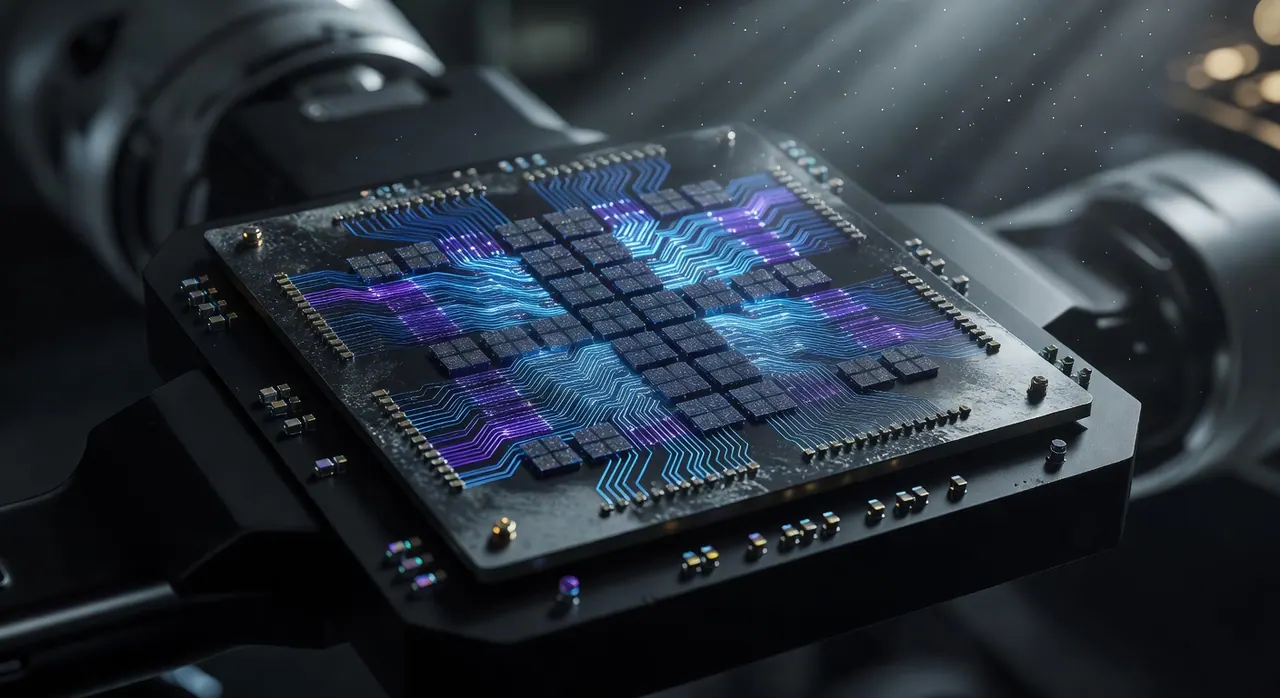
Altera Launches FPGA AI Suite 26.1.1 with Spatial Compiler for Deterministic Edge AI The update introduces a spatial mapping compiler that lays neural networks directly onto FPGA fabric using streaming dataflow instead of sequential execution. This yields higher throughput, lower power, and guaranteed low-latency behavior while retaining the reconfigurability FPGAs are known for. Integration with PyTorch, TensorFlow, and OpenVINO simplifies bringing trained models to Altera’s Agilex hardware. Practical dev impact: Robotics and real-time systems engineers can now deploy vision, sensor, and lightweight language models with predictable latency on edge hardware without locking into ASICs.Claude Code Weekly Releases Reinforce Its Edge in Predictable Terminal Coding Anthropic’s terminal agent continues rapid iteration, reading full codebases, proposing careful multi-file edits, running commands, and producing diffs that developers actually trust. It stands out against OpenAI Codex CLI (stronger at orchestration and tracing) and Gemini CLI (dominant on massive context) for refactor and review-style tasks. Practical dev impact: Teams can delegate coherent development slices directly from the shell with lower cognitive overhead and fewer surprising changes, accelerating senior-level work while maintaining git hygiene.
MCP Standard Gains Critical Mass as Interoperability Layer for Agentic Tools The Model Context Protocol, which standardizes exposure of tools, resources, and prompts over JSON-RPC, now sees 97 million monthly SDK downloads and thousands of public servers. It underpins seamless swapping and composition between Claude Code, Codex Agents SDK, Gemini CLI, and operational layers such as OpenClaw. Practical dev impact: Developers building internal agents or multi-tool workflows spend far less time on custom glue code and can compose best-of-breed components with confidence that interfaces will remain stable.
Terminal Agents and Operational Layers Evolve Toward Full Execution Backbones Beyond one-off prompts, tools like OpenClaw (now at scale with session memory, sub-agents, and browser control) and the enhanced Codex Agents SDK emphasize retries, observability, and long-running operational workflows such as research loops or CRM automation. Practical dev impact: Engineering and product teams can shift from ad-hoc automation scripts to managed, observable AI-driven processes that maintain state and recover gracefully.
Practical Impact Analysis
The convergence of deterministic hardware acceleration and standardized agentic software creates new architectural options for 2026 development teams. On the hardware side, Altera’s spatial compiler approach means physical AI practitioners no longer face an unacceptable tradeoff between performance, determinism, and iteration speed. Robotics teams, industrial automation groups, and anyone building sensor-heavy edge systems can prototype faster on FPGAs and deploy with confidence that timing guarantees will hold—something historically difficult with GPU-centric pipelines. This also opens hybrid workflows where software agents (Claude Code or Codex) generate or optimize models that are then compiled directly onto reconfigurable silicon.On the software side, the maturation of terminal agents around MCP reduces fragmentation. Developers can start with Gemini CLI for massive repositories, switch to Claude Code for surgical refactors, and orchestrate longer-running tasks with Codex Agents SDK—all while sharing the same tool definitions. Operational runtimes like OpenClaw further extend this into persistent workflows that survive beyond a single terminal session. The net productivity lift is real: faster task completion and higher PR velocity are already documented. However, the countervailing metrics—exploding review times, rising incident rates per PR, and persistently low trust scores—cannot be ignored. Successful teams in this environment are doubling down on automated verification, sandboxed execution, trace observability, and human review gates tuned to AI-generated output characteristics rather than traditional code.
The broader implication is a bifurcation in developer skill demand. Junior roles focused on routine implementation continue to be compressed, while senior engineers who can architect agent compositions, verify outputs at system level, and integrate hardware-aware components become even more valuable. Organizations that treat these tools as infrastructure—complete with versioning of agents, MCP server governance, and performance budgets for latency-sensitive paths—will pull ahead. Those treating them as magic black boxes will accumulate technical debt and reliability issues. The April 30 releases and surrounding ecosystem momentum make it clear the bar for “production-ready AI developer tooling” has risen again. Builders should audit their current agent usage against MCP compatibility, evaluate FPGA targets for any physical or low-latency components, and institutionalize rigorous validation loops before scaling autonomous coding capacity. (238 words)
Recommended Tutorial Idea
Build a MCP-aware terminal agent workflow with Claude Code for automated codebase refactoringThis tutorial shows how to install Claude Code, expose a simple custom tool via a local MCP server, and run a multi-step refactor task that queries your codebase, proposes changes, runs tests, and iterates. It demonstrates the emerging standardized interoperability pattern highlighted in recent releases.
1. Install Claude Code via the official one-liner (macOS/Linux/WSL): `curl -fsSL https://claude.ai/install.sh | bash`
2. Start a minimal MCP server (example in Python using the official SDK) that exposes a “run_test_suite” tool. Save as `mcp_test_server.py`:
import json
from mcp.server import MCPServer, Tool

server = MCPServer(name="test-runner", version="1.0")

@server.tool()
def run_test_suite(test_path: str) -> str:
    """Run pytest on a given path and return summary."""
    import subprocess
    try:
        result = subprocess.run(
            ["pytest", test_path, "--tb=no", "-q"],
            capture_output=True, text=True, timeout=30
        )
        return f"Tests: {result.stdout.strip() or 'No output'}"
    except Exception as e:
        return f"Error: {str(e)}"

if __name__ == "__main__":
    print("MCP Test Server running on stdio...")
    server.run()
3. Launch the MCP server in one terminal: `python mcp_test_server.py`.
4. In a second terminal, invoke Claude Code with a natural language task that leverages the exposed tool: `claude-code --mcp http://localhost:port “Refactor the payment module to use async/await. Run the test suite after changes and iterate until tests pass. Be conservative with diffs.”`
5. Review the generated diffs, commit if acceptable, and monitor the trace. Extend by adding more MCP tools (vector search over docs, deployment hooks, etc.). Swap the backend model or add Gemini CLI as a second opinion using the same MCP definition.
This pattern scales to persistent operational agents and prepares your workflow for the expanding MCP ecosystem. Test in a git branch and always review changes.
Grok Deep Dive
Given the April 30 release of Altera FPGA AI Suite 26.1.1 with its spatial compiler for deterministic physical AI, combined with the rapid maturation of Claude Code, Gemini CLI, OpenAI Codex Agents, and widespread MCP adoption, design a hybrid architecture for an autonomous dev-to-deployment agent that can both refactor code in a large repository and compile/optimize resulting models for low-latency execution on Agilex FPGAs targeting a robotics perception task. Walk through the MCP tool definitions, observability strategy, verification gates, and tradeoffs between terminal-agent speed and hardware determinism.Sources
New: The AI-Dev Prompt Pack, 40 tested prompts for Claude Code, Cursor, and Gemini CLI.
See the Prompt Pack